
Air Mattresses
Alternating pressure and low air loss mattress systems for preventing and treating pressure injuries in people who cannot reposition themselves.
An air mattress system is for someone who cannot reposition themselves in bed and is therefore at risk of pressure injuries, often called bed sores. A pump continuously moves air through cells inside the mattress, so the points where the body presses into the surface keep changing rather than staying loaded for hours.
Why pressure matters so much
Skin and the tissue beneath it need blood flow. Sustained pressure over a bony point, the heel, the sacrum, a hip, restricts that flow, and damage can begin within hours. Once a pressure injury opens it can take months to heal, may need surgery, and carries a real risk of infection.
Prevention is dramatically easier than treatment, which is why these systems are usually recommended before a problem appears rather than after.
The two technologies
Alternating pressure inflates and deflates cells in a cycle, so the loaded areas change every few minutes. This is the core of most systems and is what redistributes pressure over time.
Low air loss passes a gentle flow of air through the surface to manage heat and moisture at the skin. Skin that stays damp breaks down more easily, so for anyone who perspires heavily or has incontinence, this matters as much as the pressure relief itself.
Many systems do both, and for someone at real risk that combination is usually what is wanted.
Overlay or replacement
An overlay sits on top of an existing mattress. It is less expensive and simpler to introduce, and suits lower risk situations.
A replacement system takes the place of the mattress entirely, is deeper, and gives more effective redistribution. Depth matters: a deeper mattress can support a heavier person without the body bottoming out onto the base beneath.
Getting the size and capacity right
The mattress must match the bed frame, and the system must be rated for the person's weight. Bariatric systems are wider and deeper for that reason. If the mattress is too narrow for the person, the edges become a risk in themselves.
Talk to us
Choosing between these systems is a clinical decision and usually involves an occupational therapist or a nurse. Contact us and we will work through it with you and whoever is providing care.

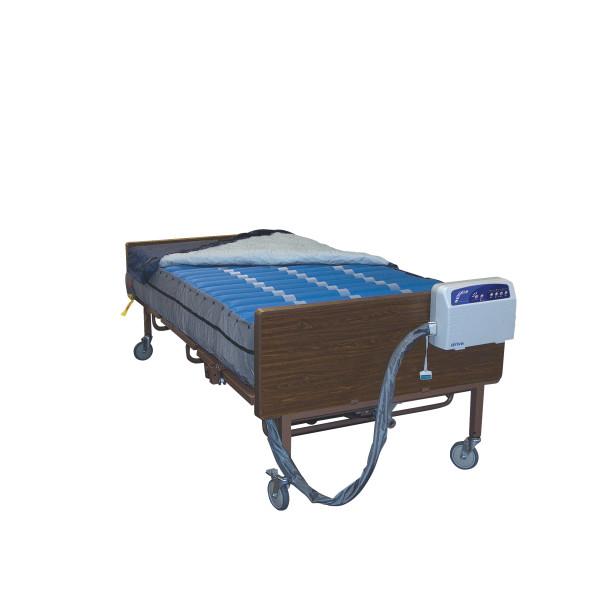
Bariatric Air Mattress System, 42" x 80"
A bariatric alternating pressure and low air loss mattress system 42 inches wide, between a standard and a full bariatric surface.
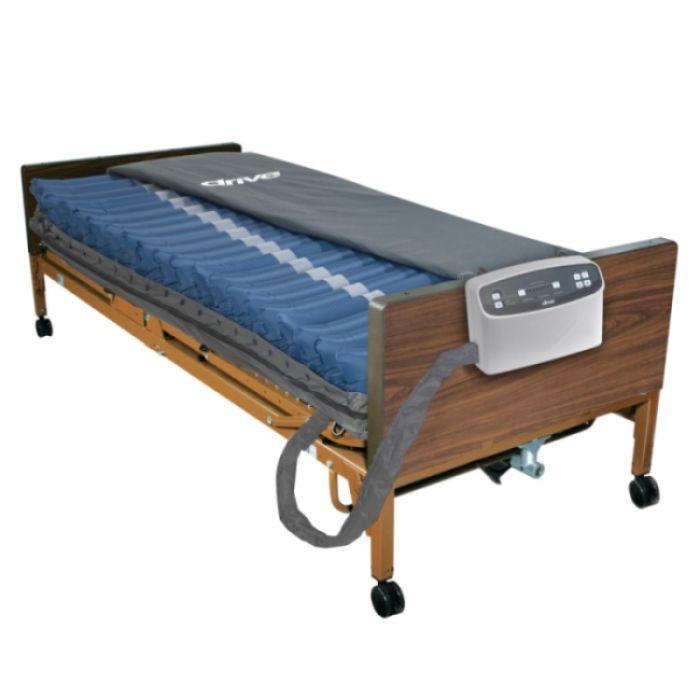
Bariatric Air Mattress System, 48" x 80"
A bariatric alternating pressure and low air loss mattress system, 48 inches wide and 8 inches deep.
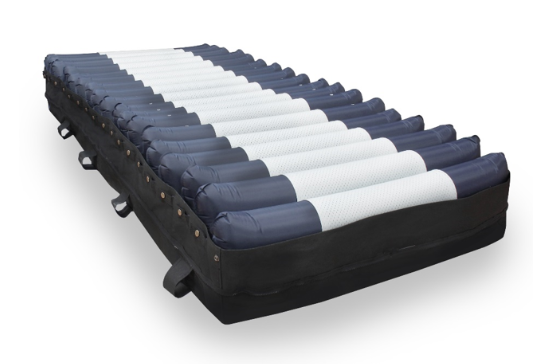
Blake Salute RDX Air Mattress
A micro low air loss system using 3-to-1 alternation, so two thirds of the body stays supported while the rest is offloaded.
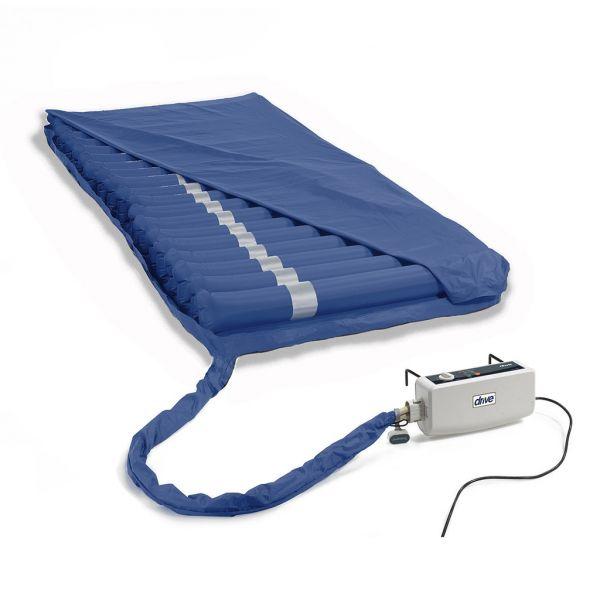
Med-Aire 5" Alternating Pressure and Low Air Loss Overlay
Low stock
An alternating pressure and low air loss overlay that sits on an existing mattress, for lower risk pressure care.
Med-Aire 8" Alternating Pressure and Low Air Loss Mattress
A mattress replacement system combining alternating pressure with low air loss, for preventing and treating pressure injuries.
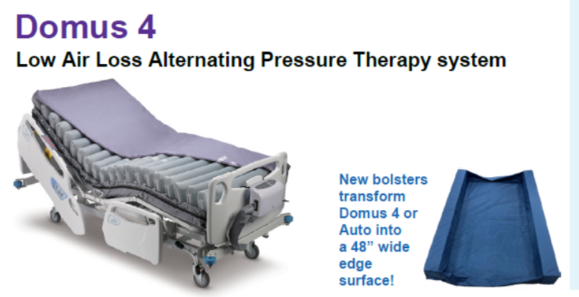
Permobil Domus 4 Alternating Pressure Mattress
An alternating pressure and low air loss system with seat inflation and static modes, for medium to high pressure injury risk.
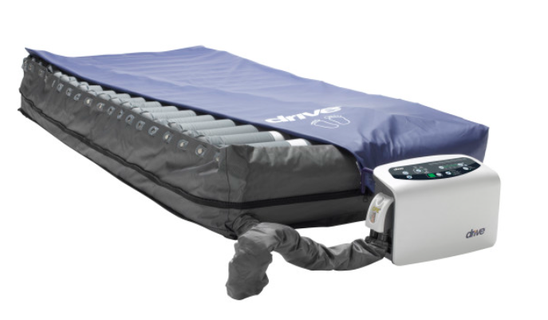

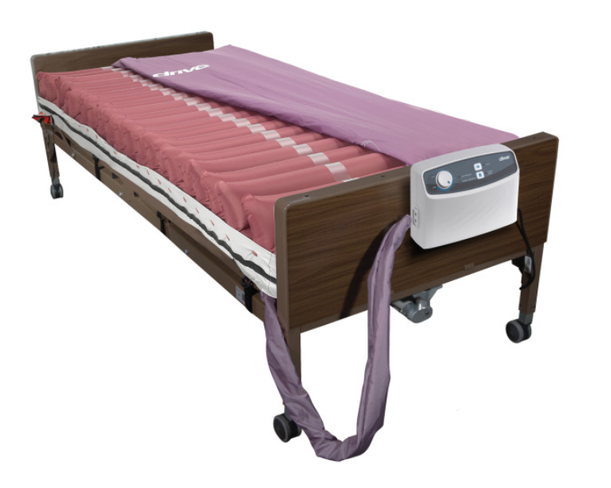
Refurbished Air Mattress System
In stock
Refurbished air mattress systems for pressure care, available in several widths and as an overlay. Choose the size that suits the bed and the person.
We're here for your questions.
Client, caregiver or therapist — good decisions start with good information. Our team is available seven days a week to help you choose and to check funding eligibility.