
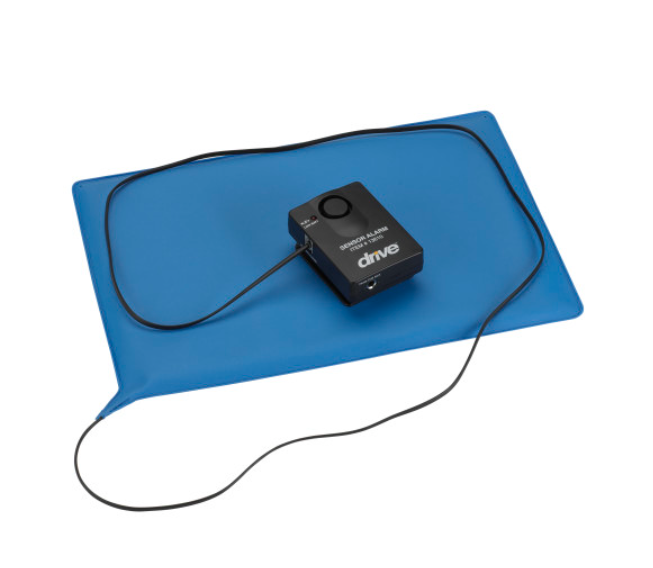
Pressure Sensitive Bed and Chair Alarm
An alarm that sounds when someone gets up from a bed or chair, giving a carer warning without restraint.
Why this one
Warning, not restraint
Alerts a carer when the person gets up, rather than physically restricting them with a rail or barrier.
Seconds of warning
Gives a few seconds to reach someone, turning a potential fall into an assisted transfer.
Useful overnight
Works overnight, where a carer asleep in another room would otherwise hear nothing until after a fall.
After hospital discharge
Suits someone told not to mobilise alone after discharge who does not reliably remember.
Test it regularly
Test it regularly, since a household relying on a silent alarm has stopped listening for the person.
Think about placement
Site the unit so it is audible to the carer without startling the person as they get up.
About this product
A pressure sensitive alarm that sounds when someone gets up from a bed or a chair. A pad under the person detects when their weight comes off it, and the alarm alerts a carer.
Warning rather than restraint
The alternative to an alarm is usually a physical barrier: a rail, or a chair that is hard to get out of. Both restrict the person, and both can be climbed or fought.
An alarm restricts nothing. The person is free to move, and the carer gets a few seconds of warning to reach them. For someone who forgets they need help standing, that warning is often the difference between an assisted transfer and a fall discovered afterwards.
Where it earns its place
Overnight, where a carer is asleep in another room and would otherwise hear nothing until the person had already fallen.
During the day, where a carer cannot be in the room constantly but needs to know when the person moves.
And after a hospital discharge, where someone has been told not to mobilise alone but does not reliably remember.
Practical points
Test it regularly. An alarm that has stopped working is worse than none, because the household has stopped listening for the person and is relying on it instead.
Consider where the alarm unit sits. It needs to be audible to the carer and not so loud beside the bed that it frightens or disorients the person as they get up, which can itself cause a fall.
The pad should be positioned so normal shifting in bed does not trigger it, or the alarm gets ignored.
Product Specifications
| Type | Pressure sensitive patient alarm, for bed or chair |
|---|---|
| How it works | A pad detects when the person's weight comes off it and sounds an alarm |
| Purpose | Alerts a carer that the person is getting up, without restricting them |
| Best for | Overnight monitoring, daytime supervision from another room, and post discharge |
| Placement | Site the unit to be audible to the carer without startling the person as they rise |
| Pad position | Position so normal shifting in bed does not trigger it, or the alarm will be ignored |
| Maintenance | Test regularly. A silent alarm is worse than none once the household relies on it. |
Details
| Item code | 25000426 |
|---|---|
| Category | Bed Accessories |
| Unit | Unit |
Why work with Help Mobility?
Same-Day Delivery
Across the Greater Toronto Area, seven days a week.
Certified Technicians
Trained, certified, and available for service and repairs.
Funding Support
We help you find the funding you qualify for and handle the paperwork with you.
Try Before You Buy
28-day demo program on beds, wheelchairs and bathroom aids.
You may also like
.jpg)
Questions about this product?
Our team is available seven days a week to help you choose and to check funding eligibility.