
Stock Cushions
Air and hybrid wheelchair cushions that protect skin and hold the pelvis square, sized to the chair.
A wheelchair cushion is not padding. For anyone who sits for most of the day, it is the main thing standing between them and a pressure injury.
Why sitting is harder on skin than lying
Seated, almost all of a person's weight lands on two small areas: the sitting bones, and the tailbone if the pelvis rolls back. The pressure per square inch is far higher than anywhere the body meets a bed.
Someone who shifts their weight regularly, even without thinking about it, relieves that pressure constantly. Someone who cannot does not, and the damage begins in the tissue beneath the skin, so it is well advanced before anything is visible on the surface.
The two jobs a cushion does
Pressure redistribution, spreading load off the sitting bones and across a wider area.
Posture, holding the pelvis level and square so the person does not slide forward or tip to one side. A cushion that lets the pelvis roll backwards works against the back support and undoes it.
The best cushion for pressure is not always the best for stability, which is why the choice is a clinical one rather than a matter of comfort.
Air, foam and hybrid
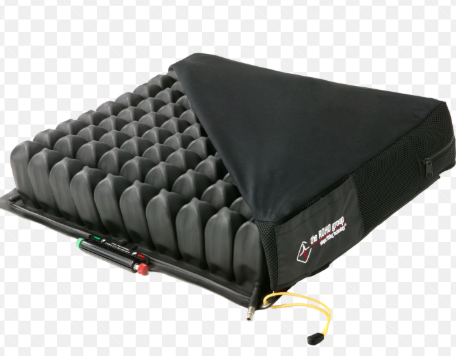
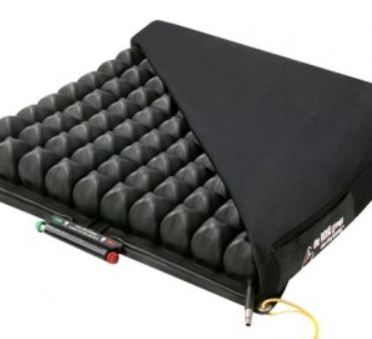
Air cushions, such as the Roho, use interconnected cells that let the body sink in and redistribute pressure extremely well. They are the strongest option for skin protection and the usual choice where there is already a wound or a history of one.
The trade is maintenance: they need checking and inflating correctly. An over-inflated air cushion protects nobody, and getting the inflation right is something to be shown once and then checked regularly.
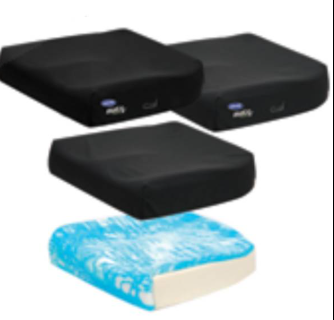
Hybrid cushions, such as the Matrx Multi, combine a contoured foam base with a fluid or gel insert at the sitting bones. Less maintenance, good pressure performance, and more inherent stability for someone who needs postural support as well.
High or low profile refers to cushion depth. Higher gives greater immersion and more protection; lower loses less seat height, which matters for transfers and for getting under a table.
Sizing
The numbers in our product names are width by depth in inches: an SC1616 is 16 by 16, an SC1820 is 18 wide by 20 deep.
Width should match the chair's seat width. Depth should end about two to three finger widths short of the back of the knee, so it supports the thighs without pressing behind the knee.
Covers matter too
A cover that is too tight stops the cushion working, because the surface cannot deform under the person. Incontinence covers are available where needed.
Ask us
Tell us the seat width of the chair, how many hours a day the person sits, whether they can shift their own weight, and whether there is any history of skin damage. If the answer points to an assessment first, we will say so.
We're here for your questions.
Client, caregiver or therapist — good decisions start with good information. Our team is available seven days a week to help you choose and to check funding eligibility.