
Stock Backs
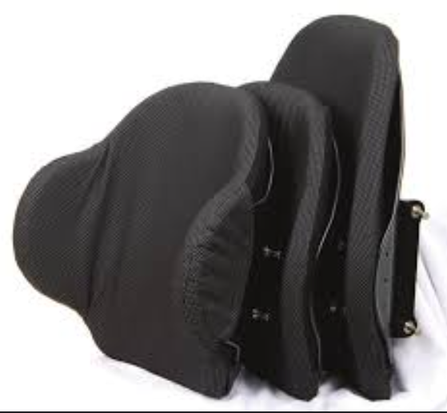
Rigid back supports that replace stretched sling upholstery and hold the pelvis and trunk in a proper position.
A wheelchair back support replaces the sling upholstery that comes with most chairs, and it is usually the cheapest change that makes the biggest difference to how someone sits.
Why sling upholstery is the problem
The fabric back on a standard wheelchair stretches. It starts flat and within months it has hammocked into a curve.
That curve pushes the shoulders forward, rolls the pelvis backwards and rounds the spine. From there the person slides forward in the seat, the head comes forward, and no cushion will fix it, because the problem is behind them rather than underneath them.
A rigid back support holds a consistent shape and gives the trunk something solid to work against.
What changes when the back is right
The pelvis stays upright, which is the foundation of everything else in seating. Breathing and swallowing are easier when the trunk is not collapsed. Reaching and pushing get easier because the shoulders are in a position to work from. And pressure stops concentrating where the person has slid to.
Sizing
Backs are sized by width and height, which is what the numbers in our product names mean: a 1616 is roughly 16 inches wide by 16 high, an 1818 is 18 by 18, a 2018 is 20 wide by 18 high.
Width should match the seat width of the chair. Height depends on how much trunk support the person needs: lower backs leave the shoulders free to push, taller backs support someone with less trunk control.
Choosing a back taller than necessary restricts an active user's pushing. Choosing one too short leaves someone unsupported where they most need it.
Mounting
Back supports attach to the chair's back canes with brackets, and the mounting position sets the angle and how far forward or back the support sits, which changes the seat depth the person actually has.
Small adjustments here have large effects on posture, so it is worth having it fitted rather than bolted on.
Ask us
Tell us the make and model of the chair and its seat width, and what is happening when the person sits in it: sliding forward, leaning to one side, or slumping. Where a seating therapist has specified a back, bring the recommendation and we will supply exactly that.

We're here for your questions.
Client, caregiver or therapist — good decisions start with good information. Our team is available seven days a week to help you choose and to check funding eligibility.